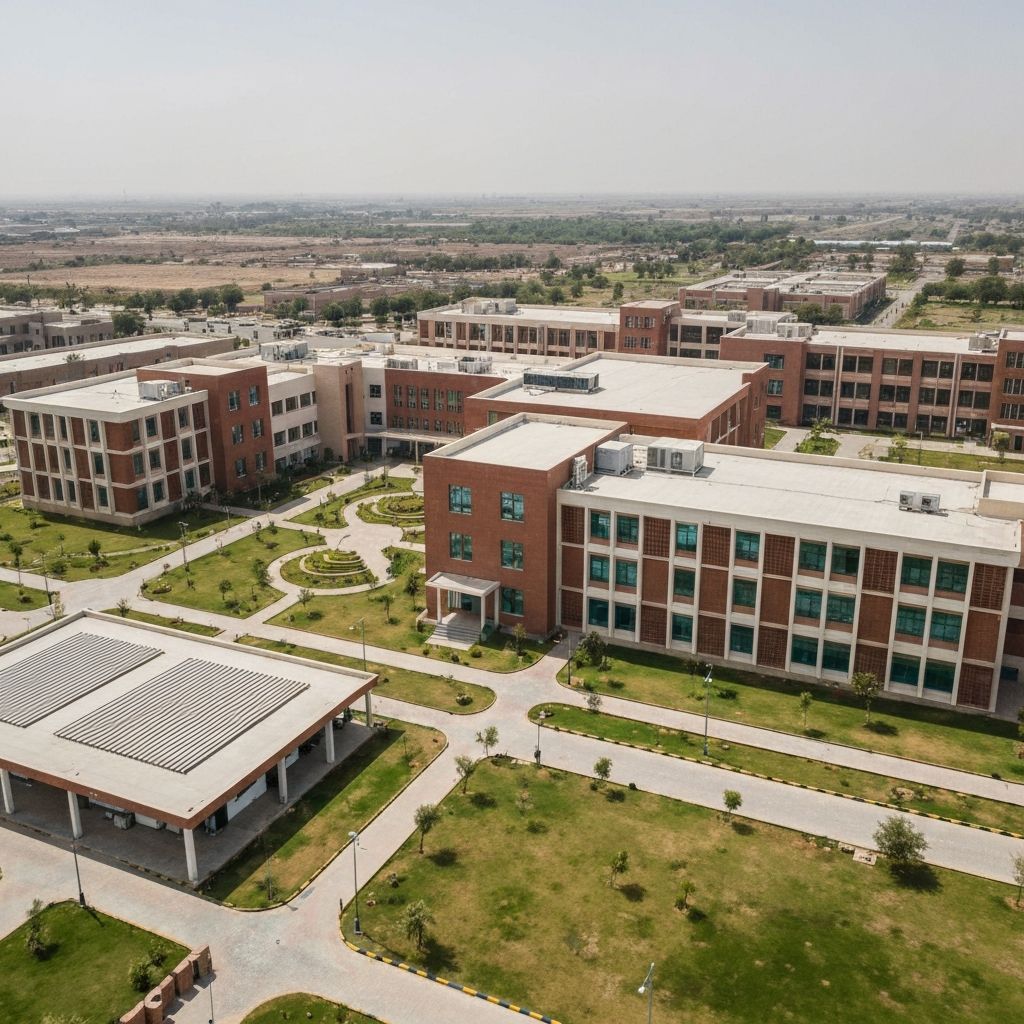
Educational Architecture for Rawalpindi's Learning Institutions
Rawalpindi's educational landscape reflects the city's character—established institutions with deep community roots alongside emerging schools serving growing neighborhoods. From cantonment area schools with military precision to community schools adapting to urban constraints, each institution requires architecture that addresses its specific context and aspirations.
Our educational architecture practice brings expertise in designing learning environments that work for Rawalpindi's conditions—addressing site constraints common in established areas, creating efficient facilities within available footprints, and designing buildings that maintain comfortable learning environments despite challenging weather extremes.
Educational Design Services We Provide
Our educational facility design services encompass:
School Campus Planning
Comprehensive site planning optimizing building placement, outdoor spaces, circulation patterns, and future growth within available land.
Classroom Block Design
Learning spaces with optimal daylighting, ventilation, acoustics, and flexibility supporting various teaching approaches and class configurations.
Science and Computer Labs
Specialized laboratories with appropriate safety systems, equipment provisions, and infrastructure for practical science and technology education.
Assembly and Multipurpose Halls
Flexible large spaces accommodating assemblies, examinations, performances, and community events with appropriate acoustic treatment.
Sports and Physical Education
Indoor and outdoor sports facilities including covered play areas addressing Rawalpindi's weather variations while maximizing physical activity opportunities.
Administration and Support
Efficient administrative areas, staff rooms, counseling spaces, and support facilities enabling smooth institutional operations.
Designing for Effective Learning
Educational research consistently demonstrates that physical environment impacts student achievement. Natural daylight improves concentration and reduces fatigue. Appropriate acoustics ensure students hear teachers clearly. Thermal comfort prevents distraction. Color and material selections influence mood and behavior. Our designs integrate these evidence-based principles into every educational facility.
Beyond individual classroom design, campus organization influences educational outcomes. Logical building layouts reduce confusion and transit time. Age-appropriate separation protects younger students while allowing older students independence. Visible circulation routes enhance supervision without creating institutional atmospheres.
Educational Facility Types We Specialize In
Our Rawalpindi educational portfolio includes:
Primary Schools
Child-centered environments with age-appropriate scales, supervised outdoor play, and welcoming atmospheres supporting early education.
Secondary Schools
Subject-specialized facilities with science labs, computer rooms, and career preparation spaces supporting matriculation curricula.
Intermediate Colleges
Pre-university environments with advanced laboratories, lecture facilities, and spaces supporting academic specialization choices.
Vocational Training Centers
Hands-on learning environments with workshops, practical training spaces, and industry-standard equipment for skills development.
Religious Educational Institutions
Madrassas and religious schools with appropriate prayer spaces, residential facilities, and traditional learning environments.
Safety and Security Priorities
Student safety drives our design decisions. Controlled access systems manage visitor entry without creating fortress-like atmospheres. CCTV placement provides comprehensive coverage of grounds and buildings. Fire safety systems exceed code requirements with clear evacuation routes and assembly areas. Structural design meets seismic requirements appropriate for the region.
Traffic management receives careful attention in school design. Drop-off areas accommodate parent vehicles with appropriate queuing. Bus loading zones separate from pedestrian circulation. Service access routes remain distinct from student areas. These separations enhance daily safety while supporting emergency response access.
Sustainable School Design
Educational institutions benefit particularly from sustainable design—lower operating costs benefit institutional finances while environmental features provide learning opportunities. Natural ventilation reduces electricity consumption. Daylighting minimizes artificial lighting requirements. Rainwater harvesting demonstrates water conservation principles students can observe and understand.
Solar installations are increasingly practical for Rawalpindi schools, providing electricity savings while demonstrating renewable energy technology. Green spaces improve air quality and create outdoor learning environments. Waste reduction systems teach environmental responsibility through daily practice rather than abstract lessons.
Our Educational Design Approach
Successful school design begins with understanding educational philosophy and operational requirements:
Needs Assessment
Detailed consultations with school leadership, teachers, and stakeholders understanding enrollment projections, curriculum requirements, and institutional aspirations.
Site Analysis
Comprehensive evaluation of available land including access, topography, surrounding context, and regulatory constraints informing design possibilities.
Concept Development
Architectural concepts establishing campus organization, building relationships, and design character through iterative stakeholder review.
Detailed Design
Complete construction documentation including architectural, structural, and MEP drawings with material specifications and interior details.
Construction Oversight
Regular site supervision ensuring construction quality matches design specifications with timely completion meeting academic calendar requirements.